Skip to main content
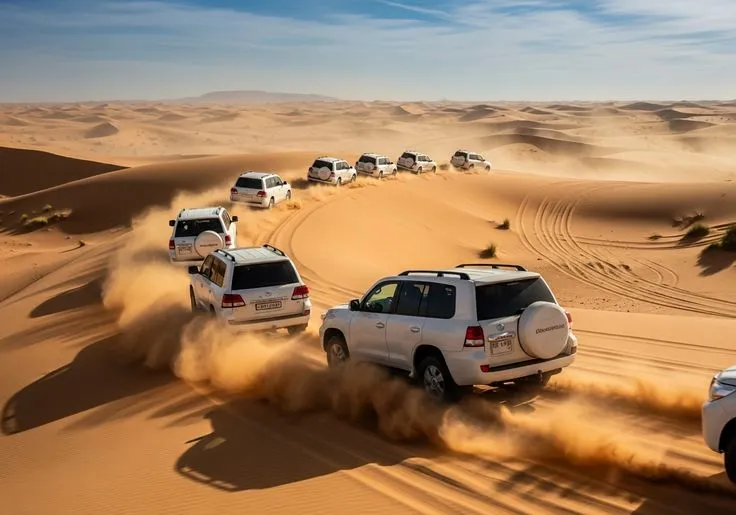
Dubai desert safari is not merely an adventure, but it is a visual experience. The textures, movement, and colors of the desert are creating unrealistic scenes, particularly for photographers and content creators. No matter how big your camera is, or whether you only use your phone, the desert gives you unlimited possibilities to make the moment that will be remembered.
The best desert safari photography is not unique because of the landscape, but by the combination of light, culture, and movement. Even simple things become Instagram-worthy photos, provided that you know where and when to press a button.
Golden Hour on the Sand Dunes
During golden hour, the desert is transformed entirely. When the sun starts to set the cruel day light becomes gentle and the dunes take on pleasant tones of gold and amber. This is the time that the desert appears to be the most dramatic.
Once you have dune bashing, you should take a few minutes to go to a higher dune. Wide-angle shots are beautiful there, together with the curves and shadows of the sand. The sand can also provide texture with footprints, as well, and there is no need to worry that the dunes are not that smooth.
Rather than trying to hurry up taking photographs, take your time. See the play of the light on the dunes,–when you are least expecting it you usually get the best shots.
Sunset Silhouettes That Tell a Story
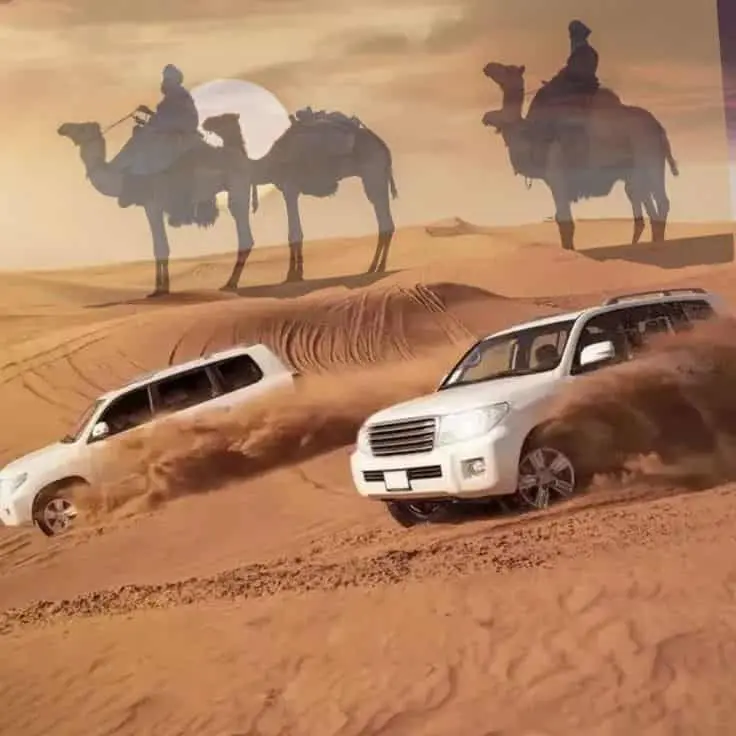
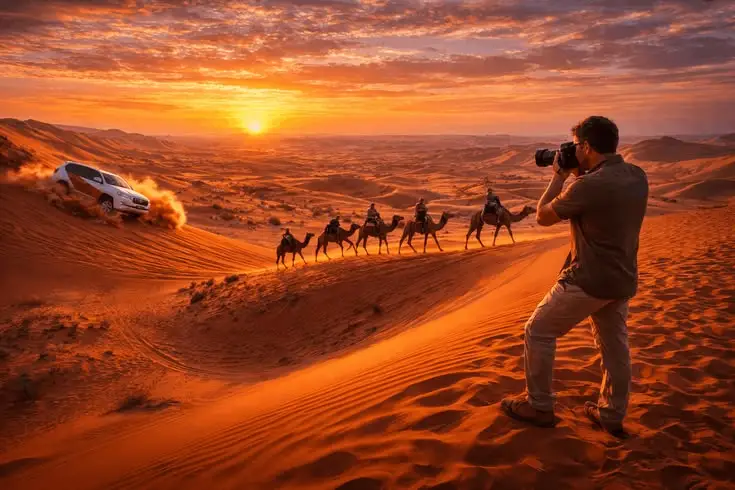
One of the simplest methods of making interesting desert images is to use sunset silhouettes. You do not need to do a lot of fancy editing, all you need to do is to place your subject between the camera and the setting sun.
Human figures on the ridges of dunes, walking camels, or even a group of silent people can become impressive figures. These pictures are emotional and cinematic particularly when they are kept minimalistic.
Use various angles other than shooting everything directly. The sand is always placed in a low angle which tends to give depth and drama.
You can also read: Ultimate Guide to Choosing the Best Desert Safari Package in use (2026)
Camel Ride Photography: Culture in Motion
Riding camels is not merely a kind of activity provided to tourists; it is a form of desert tradition. This renders them ideal in storytelling photography.
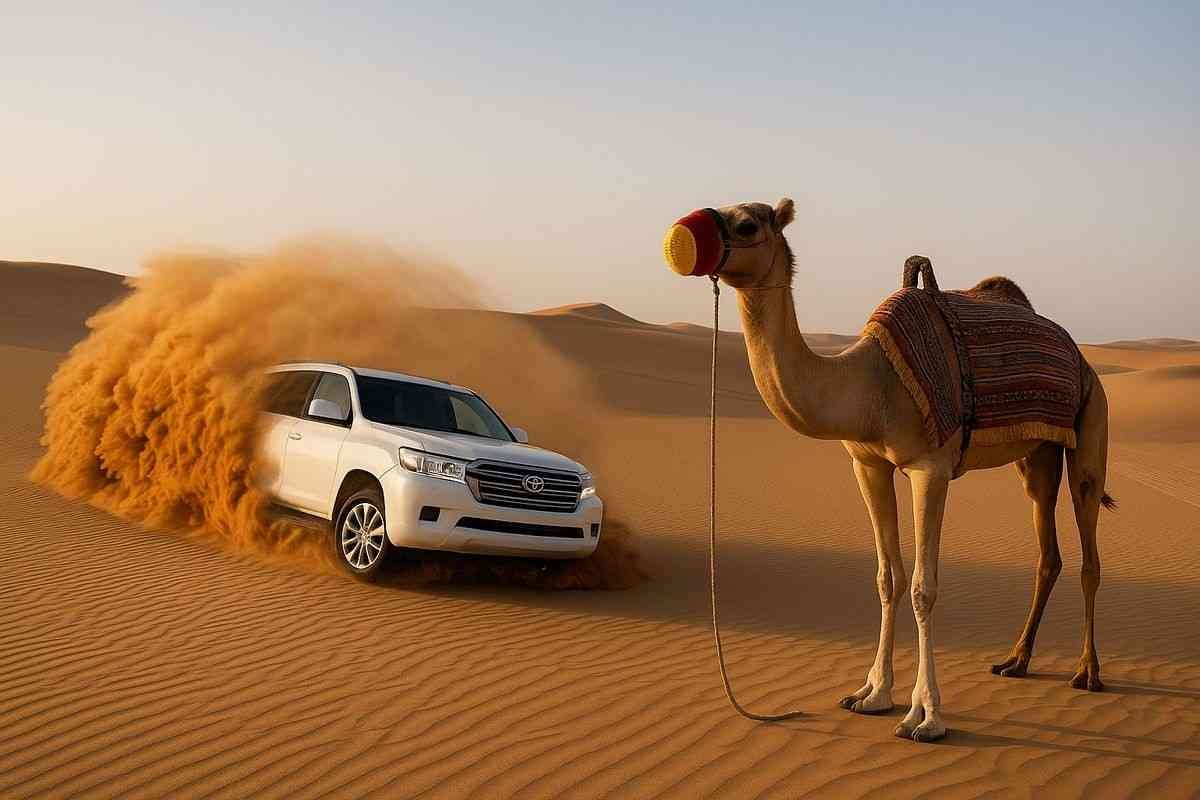
The shots on the sides tend to be effective. Take the camel and the rider as they would be found upon the camel and not positioning them like marionettes. Abayas, flowing clothes, or scarfs appear significantly gorgeous on the prosperous desert background.
Avoid overposing. Let the moment happen. The minor movements of the camel, the serene face of the rider, and the unending dunes in the background tend to produce the most original photographs.
Traditional Camp Moments You Shouldn’t Miss
As you arrive at the desert camp, there are more chances of doing photography. The camp photos concentrate on details and culture, unlike the dunes.
Henna designs being applied in close-ups, hands holding Arabic coffee cups or dates placed on traditional trays will warm and make your feed very intimate.
Live shows such as Tanoura and fire shows would suit motion shots. Rather than attempting to capture every movement, leave some of the blur to the picture – this would give it some energy and make the picture look more realistic.
Such photos do not merely depict the location of where you were but what you encountered.
Portraits in the Desert: Simple Is Better
Desert portraits are the best ones that are sparse. The background is also very strong and therefore your subject does not require loud outfits or dramatic poses.
Earthly colors such as beige, white, black, or neutral colors are combined with the sand beautifully. The heavy patterns should be avoided as well as flashy neon colors which distract the scene.
The poses are natural, and walking and sitting, as well as looking away, can be more authentic than camera directly aimed positions. The desert portraits are best when they are relaxed and not coerced.
Night Photography and Stargazing Moments
In case you include an overnight stay in your safari, you will have a totally different aspect of the desert. The sky is the center of attention after the lights go away.
Clearing desert skies are the best to take stars. Night mode phone cameras can also give amazing results provided that the phone is kept still.
Night shots are also excellent when there is a camp fire. The firelight on the dark desert is a warm cinematic atmosphere that is difficult to find elsewhere.
Small Details That Make Big Visual Impact
Some of the most engaging desert photos are not wide landscapes but small details.
Wind patterns on sand, traditional cushions at the camp, lanterns, shoes left outside tents — these details quietly tell the story of the experience.
These shots work especially well as carousel posts or story highlights on Instagram.
Practical Tips for Better Desert Photos
The desert environment can be challenging if you’re not prepared. Sand, heat, and light can all affect your shots.
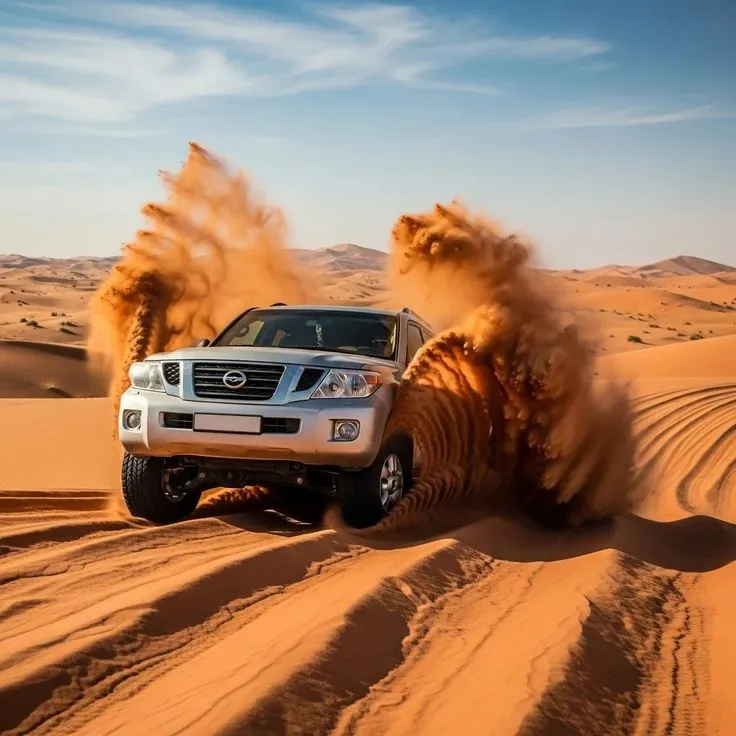
Keep your camera or phone protected from sand, especially during dune bashing. Clean your lens often — even a small smudge can ruin an otherwise perfect photo.
Don’t overshoot. Sometimes taking fewer, thoughtful photos gives better results than clicking constantly.
Editing Style That Works Best for Desert Photos
When editing desert photos, less is more. Warm tones usually work well, but avoid over-saturating the image. The desert already has natural beauty — editing should enhance it, not overpower it.
Consistent editing style across your photos helps your feed look clean and professional.
Frequently Asked Questions (FAQs)
What is the best time for photography during a desert safari?
Golden hour, just before sunset, is the best time for desert photography due to soft lighting and rich colors.
Can I take good photos with a phone camera?
Yes. Modern smartphones perform very well in desert lighting, especially during sunset and golden hour.
Is night photography possible in the desert?
Yes, especially during overnight safaris. Clear skies make stargazing and low-light photography possible.
What should I wear for desert photos?
Neutral, flowy outfits work best. Avoid bright colors and heavy patterns.
Are tripods allowed during desert safaris?
Tripods are usually allowed at camps and during overnight stays, but may not be practical during dune bashing.